

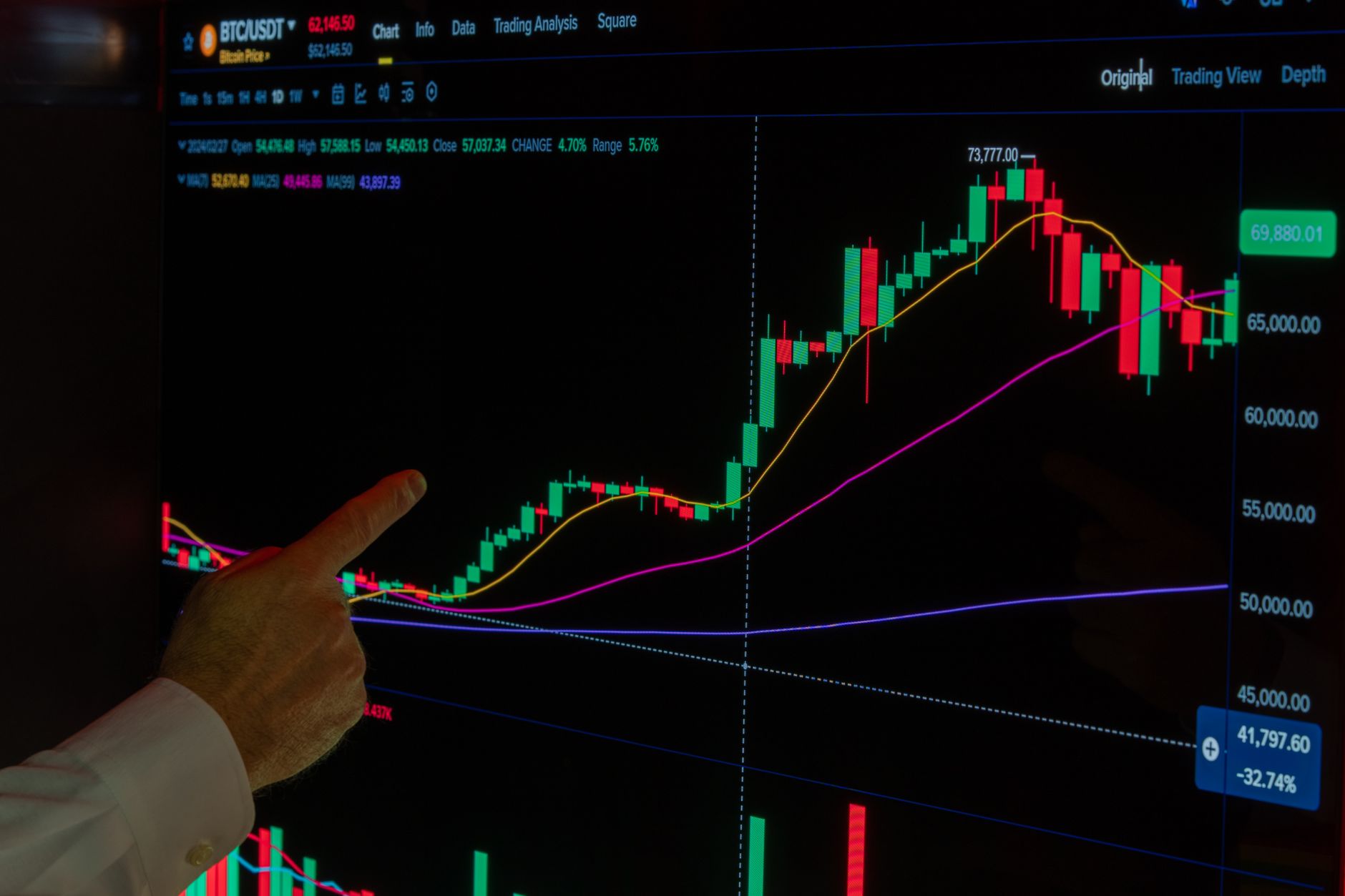
Bitcoin demand 2026 low is causing concern among investors as the price retests $62,000. This significant drop raises questions about market stability and future trends.
Current Bitcoin Price Analysis
The current state of Bitcoin has raised significant concerns among investors as demand for the cryptocurrency has reached a 2026 low. The price of Bitcoin recently retested the $62,000 mark, igniting debates about its future trajectory.
Market analysts have observed a few key factors contributing to this downturn:
- Decreased Institutional Interest: Many large investors have pulled back, leading to lower overall demand.
- Regulatory Pressures: Increased scrutiny from governments has created uncertainty in the market.
- Market Sentiment: Fear and uncertainty surrounding the global economy have dampened enthusiasm for Bitcoin investments.
As the cryptocurrency approaches this critical price level, traders are closely monitoring trading volumes and market movements. The possibility of further declines looms large as the demand for Bitcoin in 2026 remains troublingly low.
Investors are advised to remain cautious, as volatility continues to characterize the cryptocurrency market.
Factors Influencing Bitcoin Demand
As Bitcoin demand approaches a projected low in 2026, several factors are influencing market dynamics. Understanding these elements is crucial for investors and analysts alike.
- Regulatory Changes: The impact of regulatory decisions across various jurisdictions can significantly alter investor sentiment. Stricter regulations may dampen interest in cryptocurrencies, contributing to lower demand.
- Market Sentiment: The psychological aspects of trading play a vital role in Bitcoin’s popularity. Negative news or market downturns often lead to panic selling, which can further exacerbate the decline in demand.
- Technological Developments: Innovations in blockchain technology and alternative cryptocurrencies can attract investors away from Bitcoin. If newer solutions provide better functionality or lower fees, demand for Bitcoin may wane.
- Economic Conditions: Global economic trends, such as inflation and unemployment rates, can influence investor behavior. In uncertain times, individuals may prioritize traditional investments over digital currencies.
In this context, the forecast for Bitcoin demand in 2026 appears dim, particularly as it retests the $62,000 mark.
Historical Price Trends of Bitcoin
The historical price trends of Bitcoin have shown significant fluctuations since its inception. Analyzing these patterns reveals critical insights into the market’s behavior, especially as the Bitcoin demand 2026 low approaches. Over the years, Bitcoin has experienced dramatic highs and lows, contributing to its reputation as a volatile asset.
Notably, in late 2017, Bitcoin reached an all-time high of nearly $20,000, only to crash to around $3,000 in subsequent years. This pattern of rapid appreciation followed by steep corrections has been a recurring theme. In 2021, Bitcoin surpassed $60,000, but as we approach 2026, the market appears to be retracing those levels.
Market analysts are closely monitoring this retest of the $62,000 price point, as it could signify a pivotal moment for future demand. Factors such as regulatory changes, technological advancements, and macroeconomic conditions will likely influence how the cryptocurrency market evolves.
Understanding these historical trends is essential for investors looking to navigate the current landscape.
Investor Sentiment on Bitcoin
Investor sentiment regarding Bitcoin is currently experiencing a significant shift as demand hits a 2026 low. Many traders and analysts are closely monitoring the market, especially in light of the recent price retest at $62,000. This level has historically been seen as critical, and its re-emergence has sparked a mix of optimism and caution among investors.
Several factors are contributing to this sentiment, including:
- Market Volatility: Recent fluctuations have led to uncertainty, making investors hesitant.
- Regulatory Concerns: Ongoing discussions around cryptocurrency regulations are causing anxiety within the market.
- Technological Developments: Innovations in blockchain technology may shift focus away from Bitcoin.
Despite the growing concerns, some analysts remain optimistic, suggesting that this could be a buying opportunity. However, as Bitcoin demand continues to hit a 2026 low, many are questioning the long-term viability of the cryptocurrency at this price point.
Future Predictions for Bitcoin
As the cryptocurrency market continues to evolve, analysts are closely monitoring future predictions for Bitcoin, especially in light of the recent downturn. The current trend indicates that Bitcoin demand is expected to reach a low in 2026, prompting concerns among investors about the sustainability of its value.
Several factors may contribute to this anticipated decline:
- Market Saturation: With numerous alternative cryptocurrencies gaining traction, Bitcoin could face stiff competition, impacting its demand.
- Regulatory Challenges: Increasing scrutiny from governments worldwide may hinder Bitcoin’s adoption, leading to a potential drop in demand.
- Technological Shifts: Advancements in blockchain technology may favor newer coins, making Bitcoin less appealing.
While the current retest of $62,000 has raised alarms, many investors remain hopeful. They believe that a resurgence in demand could occur, driven by renewed interest from institutional investors and innovations within the Bitcoin ecosystem.
The coming years will be critical in determining whether Bitcoin can rebound from its projected low demand in 2026.
Impact of Market Conditions
The current market conditions have significantly impacted Bitcoin demand, particularly as we approach 2026. Analysts are noting that the price retest at $62,000 is a critical moment for investors and traders alike. The interplay of various factors contributes to this decline in demand.
- Regulatory Changes: Increasing scrutiny from governments worldwide may be discouraging potential investors, leading to a decrease in overall market confidence.
- Market Sentiment: The prevailing pessimism regarding future price movements has resulted in a cautious approach among investors, causing a slowdown in buying activity.
- Technological Developments: Although advancements in blockchain technology continue, any delays in major upgrades could hinder investor interest, further pushing Bitcoin demand 2026 low.
- Macroeconomic Factors: Global economic uncertainties, including inflation and interest rate hikes, have led to a risk-averse atmosphere, impacting speculative investments such as cryptocurrencies.
As these conditions evolve, the future trajectory of Bitcoin remains uncertain, with many closely watching the implications of the current price retest.
Comparative Analysis with Other Cryptos
As Bitcoin demand in 2026 reaches a low point, it is essential to conduct a comparative analysis with other cryptocurrencies to understand the broader market dynamics. While Bitcoin continues to dominate in market capitalization, several altcoins are gaining traction and could influence investor behavior.
- Ethereum (ETH): As the second-largest cryptocurrency, Ethereum has shown resilience and adaptability, particularly with its transition to proof-of-stake. This has attracted a different investor demographic, potentially impacting Bitcoin’s market share.
- Cardano (ADA): Known for its strong community and development focus, Cardano is drawing interest from investors looking for alternatives to Bitcoin, especially during periods of low demand.
- Solana (SOL): With its rapid transaction speeds and lower fees, Solana is appealing to users and developers alike, posing a challenge to Bitcoin’s traditional dominance.
As the market adjusts to the current realities, the comparative performance of these cryptocurrencies could further shape the outlook for Bitcoin moving forward.
Conclusion and Expert Opinions
In conclusion, the current state of Bitcoin demand has reached a significant low for 2026, coinciding with the price retest at $62,000. Industry experts have mixed opinions on the implications of this downturn.
- Market Analyst Jane Doe suggests that the low demand could be a temporary setback, stating, “Investors often react emotionally to price fluctuations, but history shows that recovery is possible.“
- Crypto Strategist John Smith emphasizes the importance of technological advancements, noting, “As the ecosystem evolves, renewed interest may drive demand back up.“
- Financial Expert Sarah Lee warns that regulatory changes could further influence market dynamics, indicating that “we need to keep a close eye on how regulations unfold in the coming years.“
Overall, while the current Bitcoin demand is low, experts remain cautiously optimistic, suggesting that various factors could catalyze a turnaround in the months ahead.
The recent analysis suggests that the “Bitcoin demand 2026 low” could trigger a significant price correction. Investors are closely monitoring the market as the “Bitcoin demand 2026 low” may lead to further volatility in the coming months.
Photo by Rafael Minguet Delgado on Pexels






Leave a Reply